salakhalimunmountain.com – There is a specific kind of magic that happens when you stop walking and simply breathe in the heavy rainforest air of the Halimun Salak highlands. Usually, it begins with a subtle rustle in the high canopy, followed by a long, melodic call that echoes through the mist. If you are lucky, you have just encountered the true masters of this wilderness. Knowing where to spot wild primates in Halimun Salak Forest is the secret to transforming a standard hike into a profound connection with nature. This national park is one of the last strongholds for several endemic species that found a sanctuary among the volcanic ridges and ancient trees. As a local guide who has spent countless hours tracking these graceful creatures, I can tell you that primate watching is about more than just sight; it is about learning the rhythm of the forest, understanding the dense canopy light filtering through leaves, and respecting the quiet dignity of our closest relatives in the wild.
The Song of the Silvery Gibbon
When discussing where to spot wild primates in Halimun Salak Forest, the Javan Gibbon, or Silvery Gibbon, is undoubtedly the star of the show. These “Owa Jawa” are the acrobats of the rainforest, spending their entire lives high above the soft mud trails. They are famous for their hauntingly beautiful songs, which the pairs use to defend their territory in the early morning. The best places to hear and see them are the undisturbed primary forests of the Cikaniki and Citalahab regions in Mount Halimun. Here, the forest remains thick and connected, allowing the gibbons to swing effortlessly across the canopy using their long, powerful arms. Their silvery-grey fur blends perfectly with the mountain mist, making them look like ethereal spirits jumping through the trees.
To find them, you must be at the trailhead by dawn. As the sun begins to warm the heavy rainforest air, the gibbons start their vocal duets. Following these sounds is the best way to locate them. They are shy creatures, so we always advise trekkers to keep a respectful distance and use binoculars. Watching a family of Silvery Gibbons move is like watching a choreographed dance; they embody the fluid energy of the Javanese jungle. In the search for where to spot wild primates in Halimun Salak Forest, a sighting of the Owa Jawa is considered a blessing, a rare glimpse into a world that is becoming increasingly precious and fragile. They rely on the massive, old-growth trees that only a well-preserved national park can provide.
The Ghostly Presence of the Javan Grizzled Langur
Another fascinating resident to look for when deciding where to spot wild primates in Halimun Salak Forest is the Javan Grizzled Langur. Locally known as “Rekrekan,” these primates are distinctive for their white and grey fur and their somewhat shy, contemplative nature. Unlike the energetic gibbons, langurs often sit quietly for long periods, munching on young leaves and fruit. They are frequently spotted in the transition zones between the pine plantations and the primary forest on the slopes of Mount Salak. Their presence is often given away by a sudden, sharp crashing sound in the branches as they make a leap, or by their unique, chirping alarm calls that warn the troop of a nearby predator like the Javan Leopard.
The Grizzled Langur prefers the middle to upper canopy, often choosing trees with dense foliage to hide from the midday sun. One of the best spots to observe them is along the ridges near the Kawah Ratu trekking path. As the dense canopy light shifts throughout the day, their grey coats can be hard to pick out against the moss covered rocks and lichen-clad branches. However, with a bit of patience and a quiet approach, you can often observe them grooming one another or tending to their young. They represent the quiet side of the forest, a species that thrives on the stability and peace of the deep woods. Protecting their habitat is essential, as they are highly sensitive to forest fragmentation and human disturbance.
The Social World of the Javan Surili
If you are looking for a more active social scene while researching where to spot wild primates in Halimun Salak Forest, keep your eyes peeled for the Javan Surili. These leaf monkeys are striking with their dark grey bodies and white bellies, and they are often found in larger troops than the gibbons. The Surili is a very active primate, frequently moving through the lower and middle stories of the forest in search of their favorite snacks. They are particularly fond of the lush, green slopes surrounding the waterfalls of Gunung Bunder. The sound of a rushing river often masks the sound of their movement, so you have to be extra vigilant and watch for the swaying of the branches above.
Observing a Surili troop is like watching a busy village in motion. You will see juveniles playing and practicing their climbing skills, while the older members keep a watchful eye on the surroundings. In the context of where to spot wild primates in Halimun Salak Forest, the Surili is often the species that provides the most interaction. They are curious but cautious. By sitting silently near a fruiting tree, you might find yourself surrounded by a dozen Surilis going about their daily business, seemingly unfazed by your presence. This level of immersion is only possible when we approach the forest with humility and a commitment to non-interference, ensuring we are observers rather than intruders in their ancient home.
Night Watch: The Mysterious Javan Slow Loris
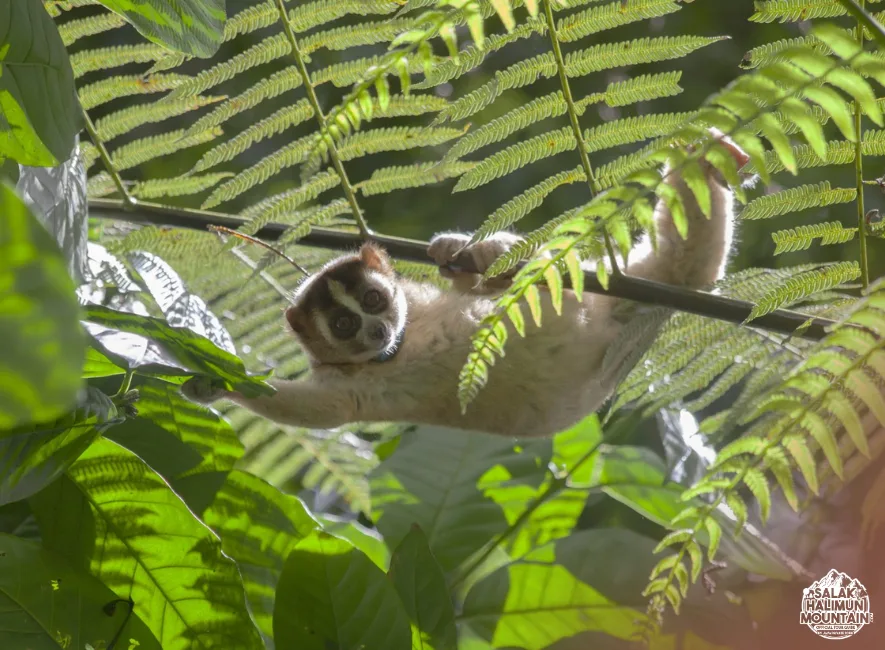
The search for where to spot wild primates in Halimun Salak Forest doesn’t end when the sun goes down. In fact, for those brave enough to venture out on a night trek, a whole new world of primates reveals itself. The Javan Slow Loris, or “Kukang,” is a nocturnal primate that moves with a deliberate, slow-motion grace. With their enormous, light-reflecting eyes and round, furry faces, they are undeniably cute, but they are also masters of the night. They are best spotted in the secondary forests and gardens bordering the national park, where they hunt for insects, nectar, and tree gum. Their eyes glow like small red embers when caught in the beam of a specialized red-light torch.
Seeing a Slow Loris in the wild is a magical experience that highlights the incredible diversity of the Halimun Salak ecosystem. While the daytime primates are all about speed and height, the Loris is about stealth and precision. Night trekking near the village of Citalahab often yields sightings of these shy creatures creeping along the vines. It is a reminder that the heavy rainforest air is filled with life at all hours. However, we always remind our guests that the Slow Loris is a protected species and should never be touched or disturbed. Their nocturnal lifestyle makes them vulnerable to habitat loss and the illegal pet trade, making the sanctuary of the national park their most important defense against extinction.
Primate Watching Etiquette and Ethics
Understanding where to spot wild primates in Halimun Salak Forest carries a responsibility to act as a guardian of their peace. Primates are highly intelligent and sensitive to human presence. To ensure their well-being and to have the best viewing experience, we always follow strict wildlife viewing ethics. This means never feeding the animals, as this disrupts their natural diet and can lead to aggressive behavior. We also maintain a “quiet zone” whenever primates are near; loud voices and sudden movements can stress a mother gibbon or cause a troop of langurs to abandon a valuable feeding site. Our goal is to be a silent shadow in their world, leaving no trace of our passing through the soft mud trails.
Photography is a wonderful way to capture the memory, but it should never come at the expense of the animal’s comfort. Avoid using flash, especially for nocturnal species like the Slow Loris, as it can temporarily blind them and leave them vulnerable to predators. In the deep rainforest, the dense canopy light is your best friend; learn to work with the natural shadows and highlights. By following these rules, we ensure that the primates of Halimun Salak remain wild and unafraid. We believe that the best wildlife encounter is one where the animal continues its natural behavior, unaware that it has just changed a human’s perspective on the world forever. Respect is the currency of the forest.
The Role of Primary Rainforest in Primate Survival
The reason why Halimun Salak remains the best answer for where to spot wild primates in Halimun Salak Forest is the sheer size of its primary rainforest. Unlike smaller forest patches, this national park offers a continuous canopy that allows primates to migrate, find mates, and access a variety of food sources throughout the seasons. The massive trees, draped in lianas and orchids, provide the complex architecture these animals need to thrive. When we trek through the heart of the park, we see the forest not just as a collection of plants, but as a multi-leveled city where each primate species occupies its own “neighborhood.” The gibbons take the penthouses, while the Surilis and langurs occupy the middle floors.
Conservation work in the park focuses on protecting these corridors. As climate change and human activity put pressure on the edges of the park, maintaining the core of the forest is vital. When you join a trek to see these primates, you are supporting the continued existence of this habitat. The local communities who act as guides and protectors are the front line of defense for the “Owa Jawa” and their neighbors. Every sighting of a wild primate is a victory for conservation, proving that with the right protection, the ancient inhabitants of Java can still flourish. The heavy rainforest air is their breath, the moss covered rocks are their foundation, and the dense canopy is their fortress.
Best Seasons and Gear for Primate Trekking
If you are planning your trip and wondering about the best time regarding where to spot wild primates in Halimun Salak Forest, the dry season (June to September) is generally preferred. During this time, the soft mud trails are more manageable, and the primates are often easier to spot as they congregate around reliable water sources and fruiting trees. However, the “shoulder” months can also be rewarding, as the misty weather adds an atmospheric layer to the experience. Regardless of the season, a good pair of waterproof hiking boots is essential for navigating the roots and slippery slopes. Binoculars with a wide field of view are your most important tool for observing behavior high in the canopy without intruding on the animals’ personal space.
We also recommend wearing long sleeves and trousers in earth tones. This not only protects you from the occasional leech or thorny vine but also helps you blend into the background. A lightweight raincoat is a must, as the weather on Mount Salak can change in an instant, bringing a sudden downpour that refreshes the forest and sends the primates scurrying for cover under large leaves. Bringing a sense of curiosity and a large dose of patience is the most important preparation you can make. The primates don’t run on a schedule; they move according to the ripening of fruit and the temperature of the air. When you finally see that first long arm reach for a branch, you will realize that every minute of the wait was worth it.
Conclusion: A Journey into the Heart of the Jungle
Locating where to spot wild primates in Halimun Salak Forest is the beginning of a life-changing adventure. It is a journey that takes you deep into the green heart of Java, away from the noise of the modern world and into a realm governed by the rhythms of the sun and the rain. Whether it is the soulful song of the Silvery Gibbon or the silent creep of the Slow Loris, these encounters remind us of our place in the natural world. We invite you to step into the mist with us, to walk the soft mud trails, and to look up into the emerald canopy. The primates are there, waiting to show you the true meaning of the wild. All you have to do is listen to the wind and follow the trail of the ancient forest.
So, if you’re ready to explore the wonders of Mount Salak Halimun, head over to our ONLINE BOOKING PAGE and let’s start planning your adventure. Or simply CLICK THIS LINK to chat with us on WhatsApp.
With our team, you’re not just getting a guide; you’re gaining a local friend who will ensure your trip is nothing short of extraordinary.